
NXP NVT2006PW: A Comprehensive Technical Overview of this Dual Supply Voltage Level Translator
In modern electronic systems, the coexistence of components operating at different voltage levels is a common design challenge. Efficient and reliable communication between these voltage domains is critical, and this is precisely the role of a voltage level translator. The NXP NVT2006PW stands out as a highly integrated, bidirectional translator designed to seamlessly interface between devices powered by disparate supply voltages. This article provides a detailed technical examination of this key component.
The NVT2006PW is a 6-bit, dual-supply bidirectional voltage level translator. Its primary function is to resolve voltage mismatches in mixed-voltage systems, such as those found in smartphones, tablets, industrial controllers, and IoT devices, where a processor running at 1.2V might need to communicate with a peripheral operating at 3.3V.
Core Architecture and Key Features
The device features six bidirectional channels, each operating independently. The core of its functionality lies in its two separate power supply pins: VCCA and VCCB. These pins define the logic voltage levels for each of the two ports (Port A and Port B).
Wide Voltage Range Support: VCCA can be supplied from 1.1V to 3.6V, while VCCB accepts a range of 1.1V to 5.5V. This wide flexibility allows it to bridge nearly all common voltage levels in modern digital design, from low-voltage processors to higher-voltage sensors and memory.
Fully Bidirectional Operation: The automatic direction sensing circuitry is a significant advantage. It eliminates the need for a dedicated direction control (DIR) pin, simplifying board layout and firmware development. The translator automatically detects the direction of the signal flow, making it ideal for bidirectional buses like I²C and SMBus. In fact, the NVT2006PW is specifically engineered to be I²C-bus and SMBus compatible, supporting clock frequencies up to 400 kHz (Fast-mode) and even higher with appropriate pull-up resistors.
High Noise Immunity and Robustness: The device incorporates special circuitry to prevent back-powering issues, a condition where a powered-down node affects a powered-up one through the I/O protection diodes. This ensures stable operation during complex power sequencing events.
Application and Usage
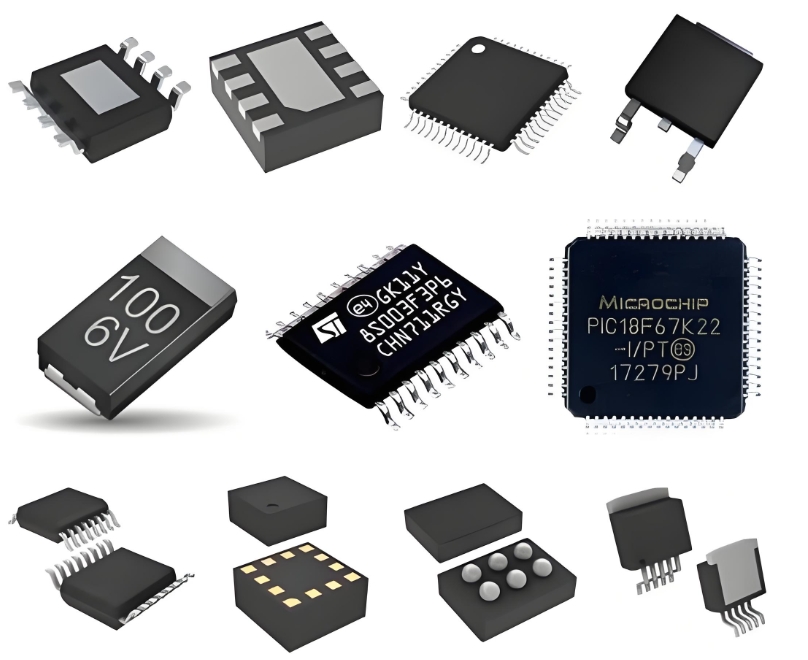
The NVT2006PW is offered in a space-saving TSSOP14 package, making it suitable for compact PCB designs. Its typical application involves placing the translator between a host controller (e.g., an MCU) and various peripheral devices.
For example:
Port A is connected to a 1.8V MCU (VCCA = 1.8V).
Port B is connected to a 3.3V sensor (VCCB = 3.3V).
The translator automatically ensures that a logic 'High' (1.8V) from the MCU is shifted to a valid logic 'High' (3.3V) for the sensor, and vice-versa, all without any required direction control from the system.
Conclusion
ICGOODFIND: The NXP NVT2006PW is an indispensable solution for modern mixed-voltage PCB designs. Its bidirectional operation, wide voltage range support, and I²C compatibility make it a robust, reliable, and simple-to-implement choice for ensuring clear communication across different voltage domains. By eliminating the need for complex direction control logic and offering strong protection features, it reduces design complexity and increases system reliability.
Keywords:
Voltage Level Translator
Bidirectional
I²C Bus Compatible
Dual-Supply
Mixed-Voltage Systems

