
NXP NX3008CBKV,115: A Comprehensive Technical Overview of the Low-Voltage P-Channel TrenchMOS FET
The NXP NX3008CBKV,115 is a state-of-the-art P-channel enhancement mode TrenchMOS field-effect transistor designed for high-efficiency, low-voltage applications. As a surface-mount device in the compact SOT23 package, it represents a critical component for power management in space-constrained, portable electronics. This article provides a detailed technical examination of its architecture, key characteristics, and primary use cases.
At its core, the device leverages advanced TrenchMOS technology. This manufacturing process involves etching vertical trenches into the silicon substrate to create the transistor's channel and gate structure. This architecture yields a significantly higher cell density compared to traditional planar MOSFETs. The primary benefit is a drastically reduced on-state resistance (RDS(on)), which is a cornerstone of its performance. For the NX3008CBKV,115, the RDS(on) is a mere 80 mΩ maximum at VGS = -4.5 V. This low resistance minimizes conduction losses, leading to less heat generation and higher overall system efficiency.
The device is characterized as a low-voltage MOSFET, with a drain-to-source voltage (VDS) rating of -30 V and a continuous drain current (ID) of -2.3 A. This makes it exceptionally well-suited for a wide range of applications where power rails are typically below 20 V. A key feature of this P-channel MOSFET is its enhancement mode operation, meaning the device is normally off when the gate-source voltage (VGS) is zero, a critical safety feature for power switching.
Furthermore, the transistor boasts an exceptionally low gate charge (Qg). This parameter is crucial for switching performance, as it determines the speed at which the device can be turned on and off. A low Qg reduces switching losses and allows for faster switching frequencies, enabling the use of smaller external passive components like inductors and capacitors. This is particularly vital in high-frequency switch-mode power supplies (SMPS) and DC-DC converters.
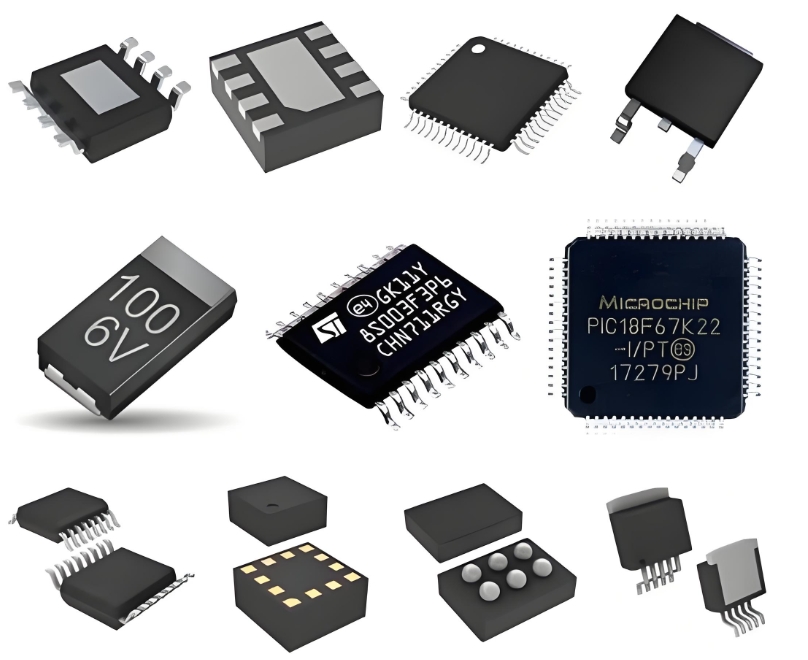
Typical applications for the NX3008CBKV,115 are extensive, highlighting its versatility:
Load Switching: It is ideal for power management in battery-operated devices such as smartphones, tablets, and wearables, where it is used to connect and disconnect peripheral circuits from the main battery to conserve power.
DC-DC Conversion: The FET is commonly employed in the high-side switch of buck converters and other power conversion topologies, thanks to its P-channel configuration which often simplifies the driving circuit.
Motor Control: It can be used in H-bridge configurations or for simple on/off control of small DC motors.
Power Gating: In modern microcontrollers and FPGAs, it is used to isolate power domains, enabling advanced low-power states.
ICGOODFIND: The NXP NX3008CBKV,115 stands out as a highly efficient and compact solution for modern low-voltage power control. Its optimal blend of very low on-state resistance, low gate charge, and a robust SOT23 package makes it an excellent choice for designers aiming to maximize battery life and minimize PCB footprint in portable and consumer electronics.
Keywords: Low RDS(on), P-Channel MOSFET, TrenchMOS Technology, Load Switch, Power Management.

